How we transformed a long, narrow, shady border
With increasing housing density in cities, gardens like ours are undeniably becoming smaller. Down the side of our house was a long narrow border in a series of raised beds that was in shade for most of the day. It was filled with large specimens of camellias, accompanied by a dense undergrowth of clivias.
Clivias are definitely a useful plant for dry shade, but I was not drawn to the planting whatsoever. Quite the opposite, the dense undergrowth scared me from looking around in the border, for fear of what I may find amongst the dead branches, twigs, fallen birds’ nests and thicket of spiderwebs. These clivias had to go.
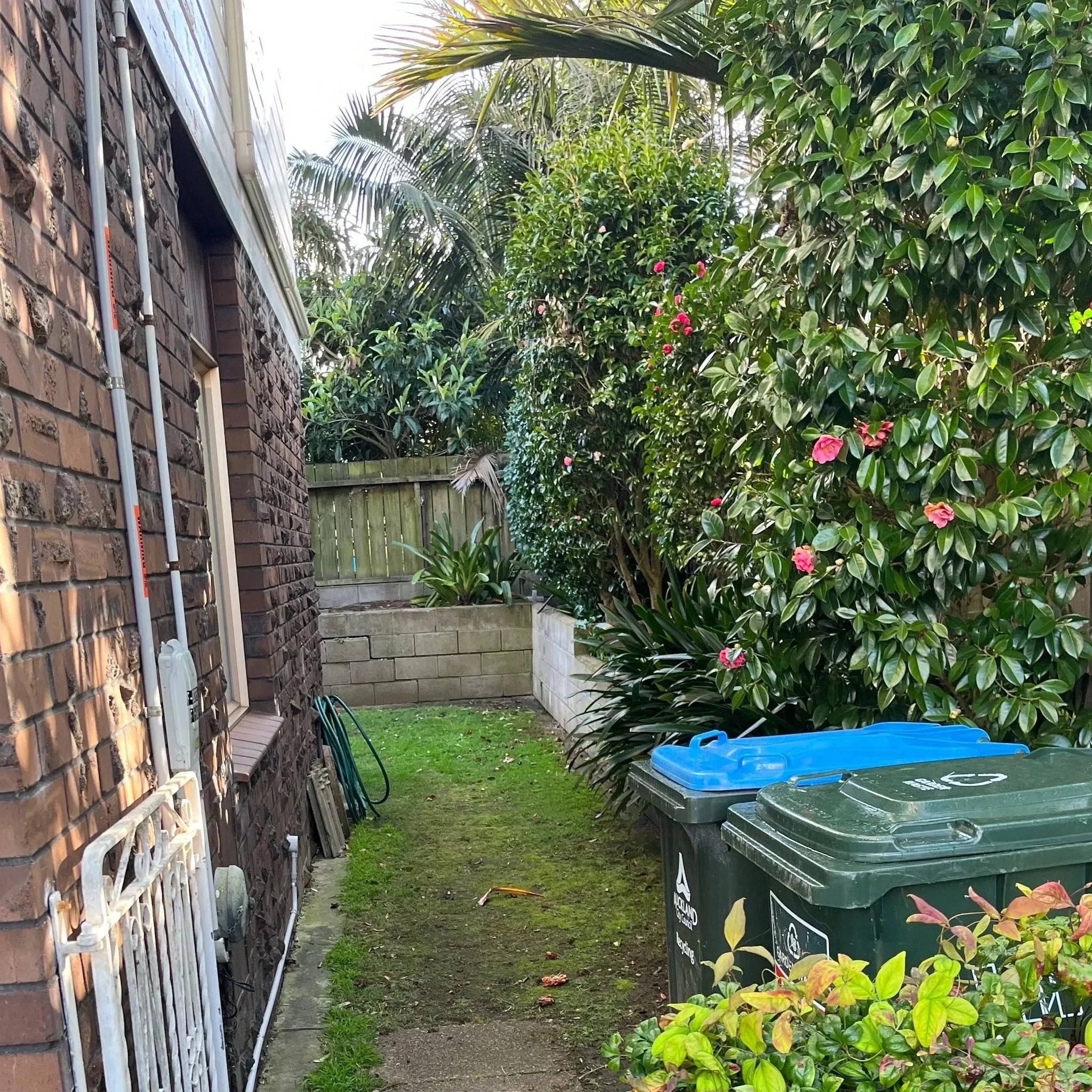
The site, pictured not too long after moving in
It took me a good amount go time to understand my own likes and dislikes in the garden before gravitating towards a Japanese garden style of planting. This, coupled with a trip to Japan last year, further strengthened the case for a Japanese-inspired garden as we noticed lovely acers, underplanted with hydrangeas and hostas lighting up the narrowest of shady spaces. To complement this, I decided to loosely follow the theme of a white garden, with the hope that the white flowers would light up the shady spots nicely.
Once I figured out a vision for this part of the garden, the temptation to immediately rip everything out and replant it to my heart’s desire was strong. However, I am glad this was done in stages over a few years. This gave me the chance to test out plant combinations, figured out what worked, and it meant this didn’t require a large outflow of funds in a short time.
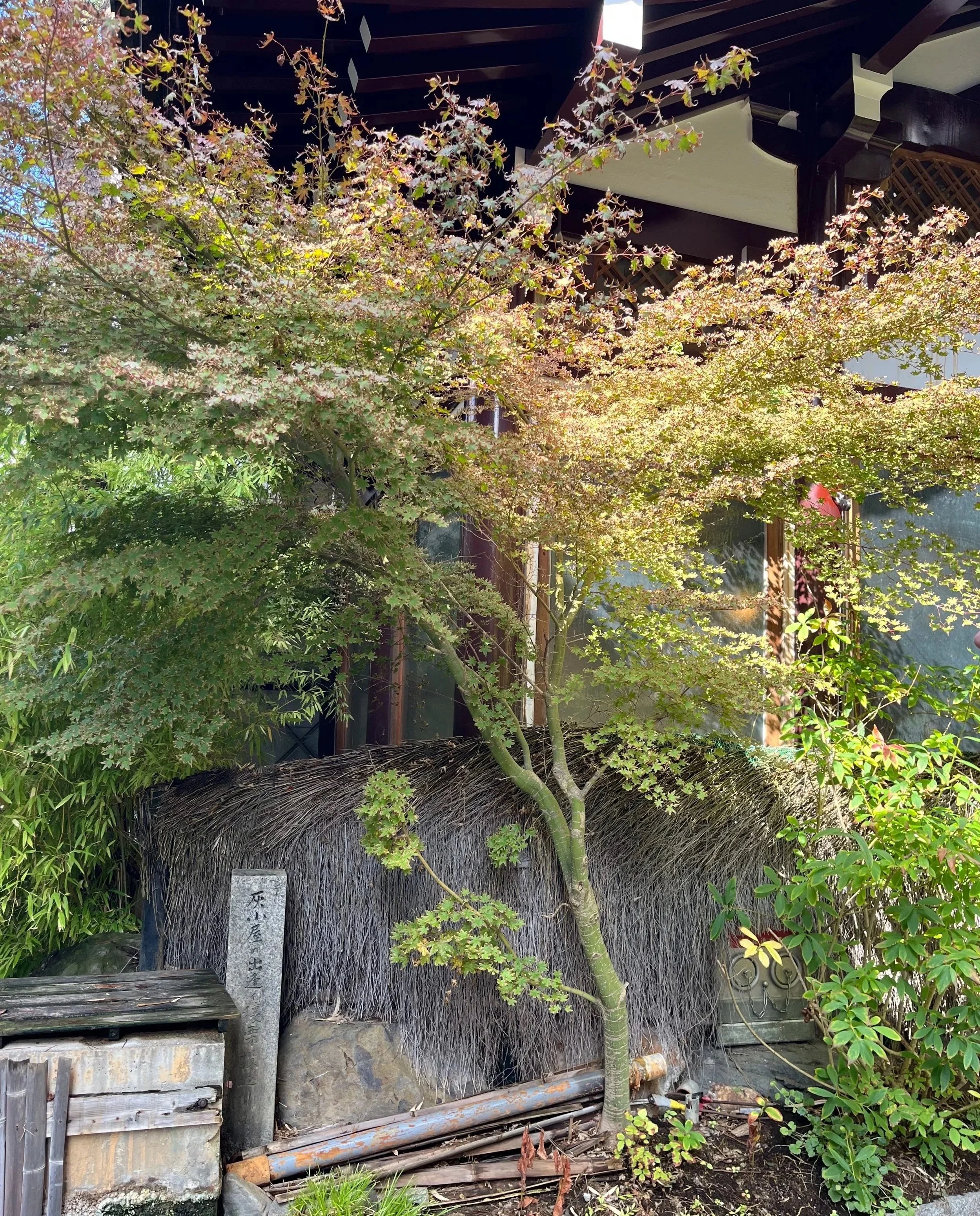
Acer palmatum, attractively filling out a narrow spot in a Japanese garden
The new structure started with a beautiful Acer Tamukeyama planted in the middle of the bed, flanked by large camellias. During this time, I greatly expanded my knowledge of shade-tolerant planting, and ended up with lots of hostas, a pair of hydrangeas (hydrangea m. trophy), and my absolute favourite grass to line the edge of the border; hakonechloa macra aureola.
What we noticed immediately was that narrow strip no longer became just somewhere you’d walk past in a hurry to get to the front or back yards. Instead, I was spending lots more time admiring the plants in this area (plus fewer spiders!), and enjoying noticing how the light moved through the area.
This winter, we made the decision to remove the rest of the large camellias from this bed. I do appreciate a good camellia, but having a hedge of them at the front, I recognise their value in being placed elsewhere in our tiny garden. Taking their place are two more acers, hence fulfilling my vision of a trio of acers, in my very own Japanese-inspired woodland garden. These are not mature specimens, so it will be a decently long journey to watch these slow-growing trees fill out the space and make more of an impact in the garden.
To complete my Japanese woodland border, I plan on trialling a variety of spring bulbs and ephemeral spring blooms such as wood anemones (anemone nemorosa) and sweet woodruff (galium odoratum). Only time will tell how successful these will be in the mild Auckland climate, but I remain hopeful as ever!
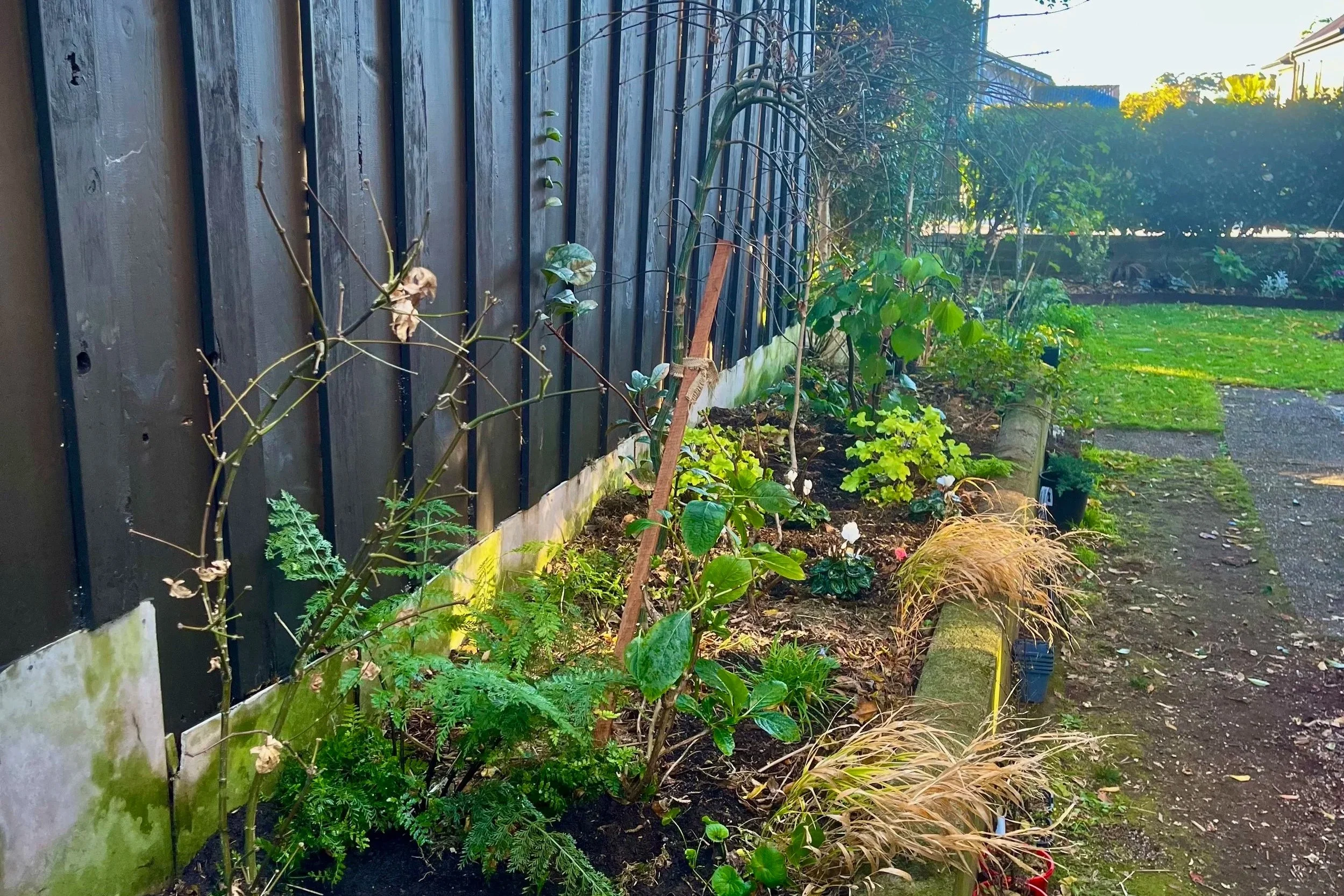
The newly planted border in winter 2026